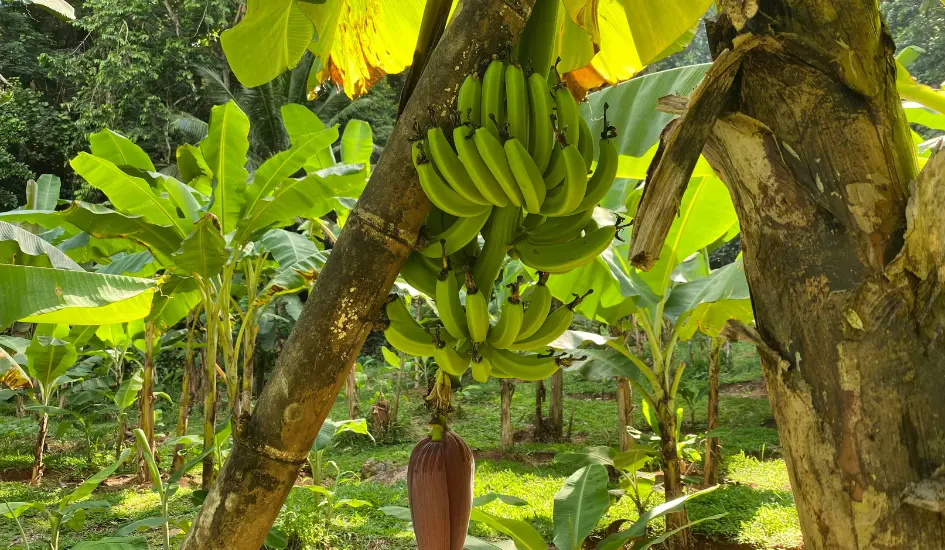
🍌 Banana Investing 101
Bananas are the most exported fruit in the world by volume. The World Bank tracks international banana prices due to their impact on food inflation and trade balances in major producing nations.
If you are thinking about investing in bananas, this quick guide is for you.
1. Global Production
Over 100 billion bananas are eaten every year, and you have 5 countries to thank: India 🇮🇳, China 🇨🇳, Indonesia 🇮🇩, Brazil 🇧🇷, and the Philippines 🇵🇭. These are the top producers - but not necessarily the biggest exporters.
The real export kings are Latin American nations: Ecuador 🇪🇨, Colombia 🇨🇴, Costa Rica 🇨🇷, Guatemala 🇬🇹, and Honduras 🇭🇳.
Ecuador 🇪🇨 alone exports about 25% of the world’s bananas, leading the global trade. While India 🇮🇳 grows the most bananas overall, it consumes nearly all of them domestically.
Bananas are the most exported fruit in the world by volume.
2. The Cult of the Cavendish
The Cavendish banana is the bland, durable, clone-soldier of the banana world. It dominates because it ships well and bruises less - not because anyone loves its taste.
All Cavendish bananas are genetically identical clones, propagated through cuttings, not seeds. This uniformity makes them highly vulnerable to disease.
The Panama Disease Tropical Race 4 (TR4) is a soil-borne fungus that can't be killed with chemicals and has already devastated plantations in Asia and parts of Africa and Latin America.
The Cavendish was itself a replacement for the Gros Michel banana, which was wiped out in the mid-20th century by the original Panama Disease.
3. Banana Republics
In the 20th century, US fruit companies like United Fruit (now Chiquita) practically ran Central American countries.
They controlled land, railroads, and ports, shaping national policies to prioritize banana exports.
When local leaders tried to implement land reforms or labor protections, U.S. corporate interests often lobbied for direct intervention.
The 1954 Guatemalan coup is the textbook case: the CIA overthrew democratically elected President Jacobo Árbenz after he challenged United Fruit’s land holdings.
The term "banana republic" originally described a country whose economy depends heavily on a single export commodity, like bananas, and is controlled by foreign companies or interests.
4. Price and Power
Bananas are cheap. Too cheap. The average banana costs less than a dollar per pound in the US, despite traveling thousands of miles. This affordability is made possible by:
- Monoculture farming, which maximizes yield but increases vulnerability to pests and disease.
- Extremely low labor wages, especially in exporting countries—banana workers often earn below minimum wage and may lack union protections.
- Aggressive cost-cutting by multinational corporations that dominate the banana market - companies like Chiquita, Dole, and Del Monte.
- Retail price wars, especially in the EU, where supermarkets have long used bananas as a "loss leader", keeping prices artificially low to attract shoppers.
5. Environmental Footprint
Banana farming looks tropical and idyllic in stock photos but tends to trash the environment.
- Deforestation to clear land for plantations, especially in biodiversity-rich areas.
- Agrochemical runoff from fertilizers, fungicides, and pesticides pollutes rivers and drinking water.
- Bananas receive more pesticide applications than most crops due to their monoculture setup.
- Over time, soil depletion leads to lower yields and requires even more inputs to maintain output.
- Banana workers are often exposed to dangerous chemicals like chlorpyrifos and paraquat, which are banned in some countries but still used in others.
6. Future of the Banana Trade
As Panama Disease spreads, the banana industry is racing to find alternatives.
Several candidates are being tested, like GCTCV-218 (a Cavendish variant that's slightly more resistant) and FHIA-17 (more disease resistant, but has a different taste).
Biotech firms are experimenting with genetically modified bananas, but consumer resistance, especially in Europe, is strong.
Fair trade bananas are gaining traction, promising higher wages and safer working conditions, though they represent only about 5-10% of total global banana sales.
Climate change also threatens production, altering rainfall patterns and increasing the spread of diseases and pests.
7. Investing in Bananas
Bananas are not traded on any major commodity futures exchange. Why? Because they spoil fast, bruise easily, and are hard to standardize.
Unlike coffee or cocoa, bananas don't store well and must be shipped in refrigerated containers and sold quickly.
The short shelf life makes them high-risk for futures trading, which requires long-term price predictability and standardized quality.
Some companies experiment with vertical integration to "invest" in bananas by controlling plantations, shipping, and retail supply chains.
Price Action Tokens
You can get exposure to banana price action through Price Action Tokens by Sara AI. These are synthetic instruments that replicate the price movements of commodities (like bananas) without requiring physical ownership or storage.
8. What drives Banana prices
8.1 Supply-side drivers
1. Weather events like hurricanes, droughts & floods, especially in Central America.
2. Climate change is a long-term threat to growing zones and yields.
3. Plant diseases like Panama Disease (TR4) & Black Sigatoka reduce yields and can wipe out entire plantations.
4. Input costs such as fertilizer, fuel, pesticides & labor directly affect production expenses.
5. Labor disruptions including strikes, protests, or poor working conditions can delay or halt supply.
6. Export logistics such as port congestion, shipping container shortages & cold chain failures lead to supply bottlenecks.
7. Government policies like export bans, land reforms, or chemical restrictions impact production and trade.
8. Currency fluctuations in exporting countries affect producer margins and global pricing behavior.
9. Market concentration where a few corporations control large parts of the supply chain, affecting output and price control.
10. Natural disasters like volcanic eruptions, landslides or earthquakes can cause sudden, large-scale supply shocks.
8.2 Demand-side drivers
1. Global consumption trends are steadily increasing, especially in emerging markets like China and India.
2. Income levels influence fruit consumption—higher income leads to greater demand for imported produce like bananas.
3. Substitution effects from other fruits (like apples, oranges, or seasonal local produce) can shift consumer preferences.
4. Retail pricing strategies such as discounts, loss leaders, or supply agreements affect how much is sold in stores.
5. Health trends like plant-based diets or high-potassium marketing can increase demand; anti-sugar movements can reduce it.
6. Population growth in major importing countries increases baseline banana demand over time.
7. Urbanization leads to greater supermarket penetration and access to imported fruits like bananas.
8. Food industry use in snacks, baby food, smoothies & processed goods drives steady institutional demand.
9. Cultural and regional preferences influence demand patterns (e.g., bananas as staple foods in parts of Africa & Southeast Asia).
10. Consumer behavior shifts due to events like pandemics, inflation, or social media trends can affect short-term demand volatility.
8.3 X-factors & chaos variables
1. Geopolitical instability like coups, trade wars, or sanctions in banana-exporting nations can disrupt supply and spike prices.
2. Global shipping disruptions such as port blockages, container shortages, or canal closures delay exports and reduce availability.
3. Speculation and financial markets reacting to inflation fears or commodity surges may drive up banana-adjacent prices despite no physical shortage.
4. Pandemics and health crises disrupt supply chains, labor availability, and consumption patterns - seen during COVID-19 with logistics bottlenecks.
5. TikTok and viral trends causing sudden demand spikes (e.g., banana bread during lockdowns, smoothie challenges, or potassium influencer cults).
6. Technological disruptions like AI in logistics, agri-biotech, or banana disease-resistant GMOs may reshape the entire market unpredictably.
7. Environmental disasters such as volcanic eruptions, earthquakes, or massive landslides in key growing regions can cause immediate export collapses.
8. International trade policy changes including tariffs, quotas, or revised trade agreements that suddenly restrict banana flows.
9. Corporate scandals or boycotts involving major banana firms (e.g., human rights violations, deforestation, or child labor revelations) impacting buyer behavior.
10. Banana financial products gaining traction and distorting price signals via synthetic demand speculation.
Start your commodity investing journey with the free Commodities Investing 101 course by Rohas Nagpal.